Tiny Signs of Hope for Monarch Butterflies in Marin
Our Work / Science & Conservation / Projects: Monarch Habitat Enhancement
Monarch momentum is building, and we just hit a major milestone: we spotted a monarch butterfly egg at Joske Grove during the breeding season!
For years, the partners of One Tam have been enhancing habitat at Joske Grove and San Carlos Way on Mt. Burdell Preserve, and monitoring monarch butterfly activity without seeing eggs at Joske Grove or increased monarch activity at San Carlos Way—until now. Last year brought the first adult monarch butterfly sighting at this site, and this season’s egg suggests our work could be paying off. At San Carlos Way, where monarchs were already active, the numbers are even stronger: 31 eggs counted this year (a 61% increase) and a 49% increase in narrowleaf milkweed after plantings in winter of 2023 and 2024.
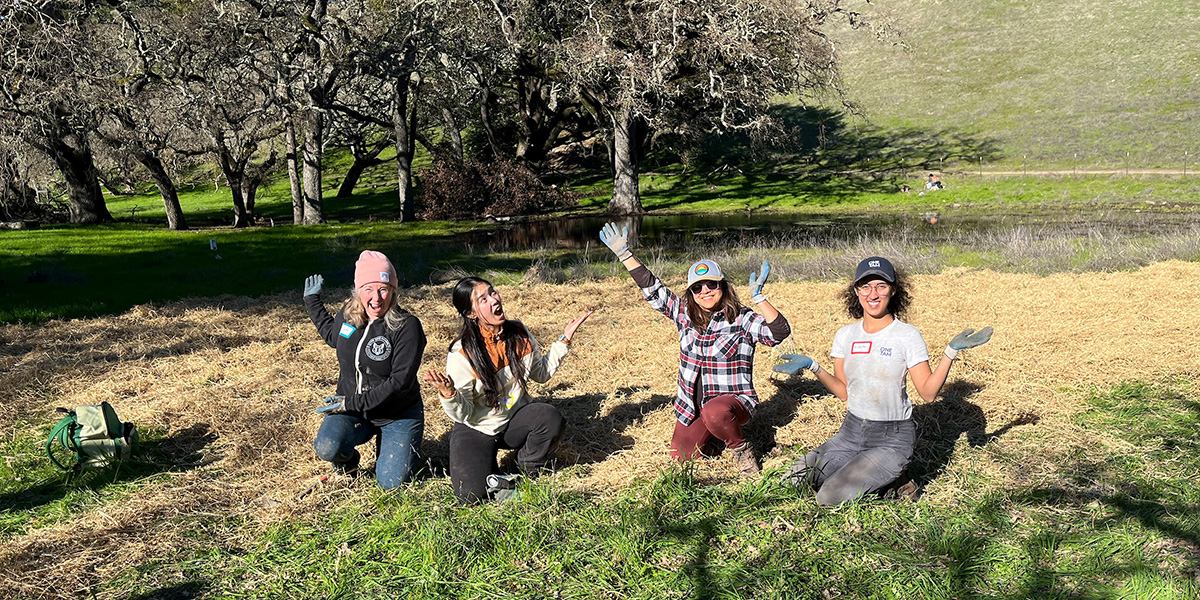
It might not seem like it, but winter is a big time for monarch butterfly work. Earlier this month, community members joined the One Tam partners at Mt. Burdell for a planting day. Together, we hiked in, learned about monarchs, and added native milkweed and nectar plants to enhance breeding habitat. Thanks to all who joined, your hands-on help is making a real difference.

A monarch butterfly is seen landing on a milkweed plant native to California, Asclepias speciosa.
johnisaacwhitaker / iNaturalist
Beyond Mt. Burdell, we’ve made strides at two historic overwintering sites: Fort Baker and Stinson Beach. Native tree planting and care at Fort Baker are complete for this season, and planning for Stinson Beach is underway. The Xerces Society's community science counts this fall and winter will show how monarchs are using these areas and guide next steps.
The big picture? Monarch butterfly numbers remain low. According to the Xerces Society, last winter was the second lowest on record. But the tiny signs of hope (and we mean tiny, as they're only the size of a pinhead) represent a big shift in these sites' ability to support monarchs and the importance of active stewardship.
Current counts for the 2025–2026 season are happening now. Want to help? Learn more or get involved at westernmonarchcount.org and log your sightings year-round on the iNaturalist app to help our scientists track the monarchs. You can also add native milkweed and native flowers that bloom in the fall, winter and early spring to your home or school garden. Check with your local nursery on which native milkweed species is best in your area, and don't grow milkweed in coastal zones (within 5 miles of the coast).
This work is supported by the Wildlife Conservation Board with funds from Proposition 68. Thank you to every volunteer, One Tam member, and partner agency helping monarchs take flight toward a brighter future.