Volunteers Spot Special Species at “Flowers and Fire” Bioblitz, Igniting Excitement
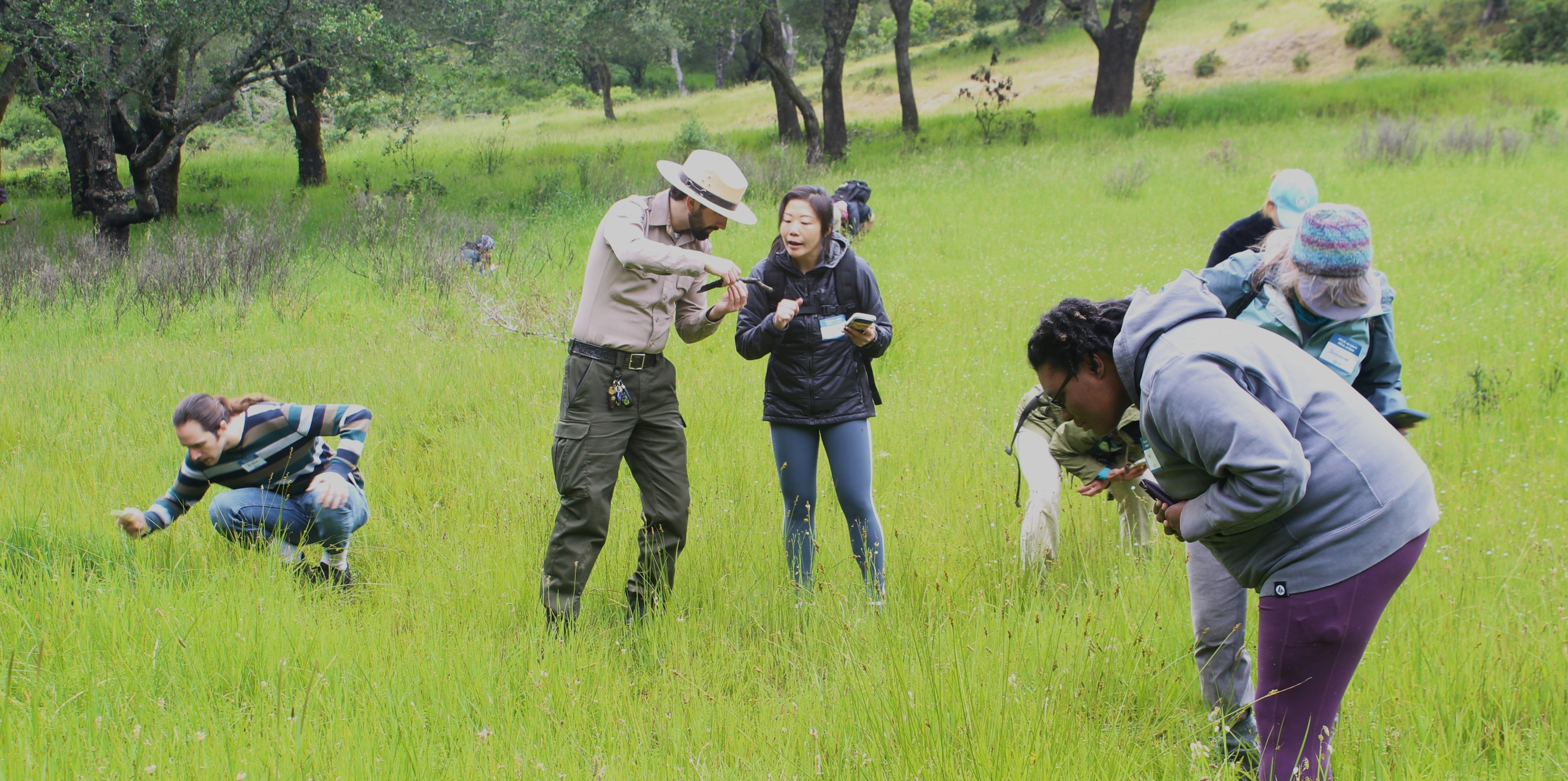
This spring, community members, scientists, and staff celebrated City Nature Challenge at Bon Tempe Lake on Mt. Tamalpais with a “Spring Flowers and Fire” bioblitz. City Nature Challenge is an annual event organized by the California Academy of Sciences and the Natural History Museum of Los Angeles County that invites people all over the world to document the life around us. A bioblitz is a survey of the species present in a specific place and time. It’s part nature walk, part treasure hunt, and filled with joyful, careful observation. Ours was a true partnership effort, supported by the Parks Conservancy, California State Parks, Marin Water, and San Francisco State University.
Together we ventured into an area that received prescribed burns last year, part of our One Tam partners’ work to improve forest health. We wanted to see how the land responded. Volunteers explored wet meadows, lake shores, and forest edges. We documented species in these different habitats from mosses and fungi to wildflowers and insects.
Results
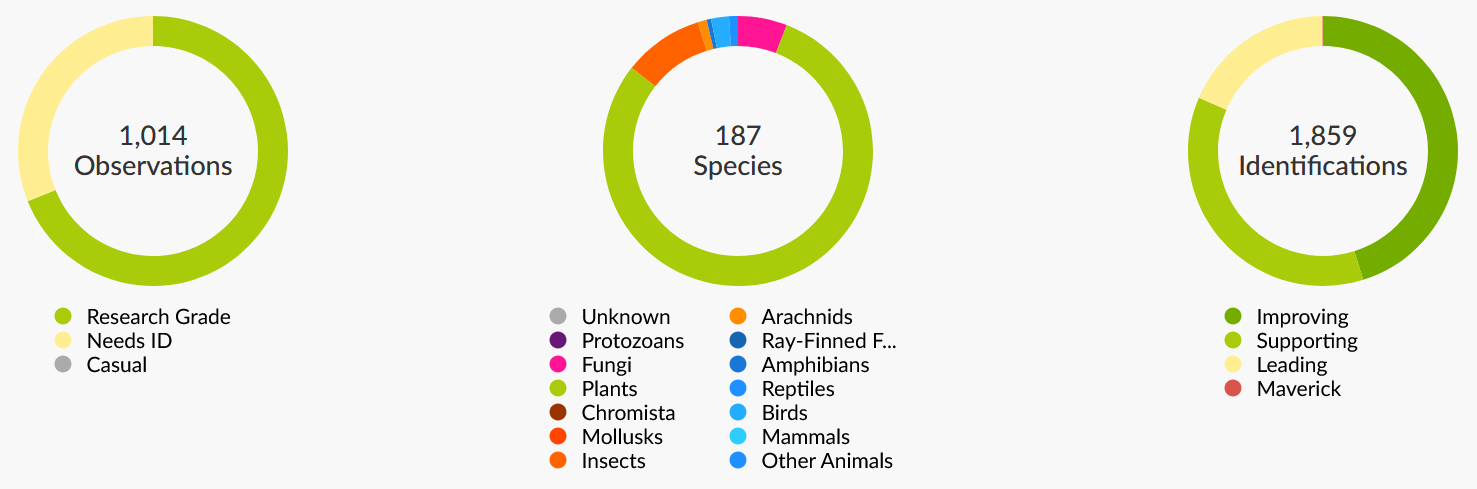
We logged 1,014 observations of 187 different species. And we made a few discoveries! These included: 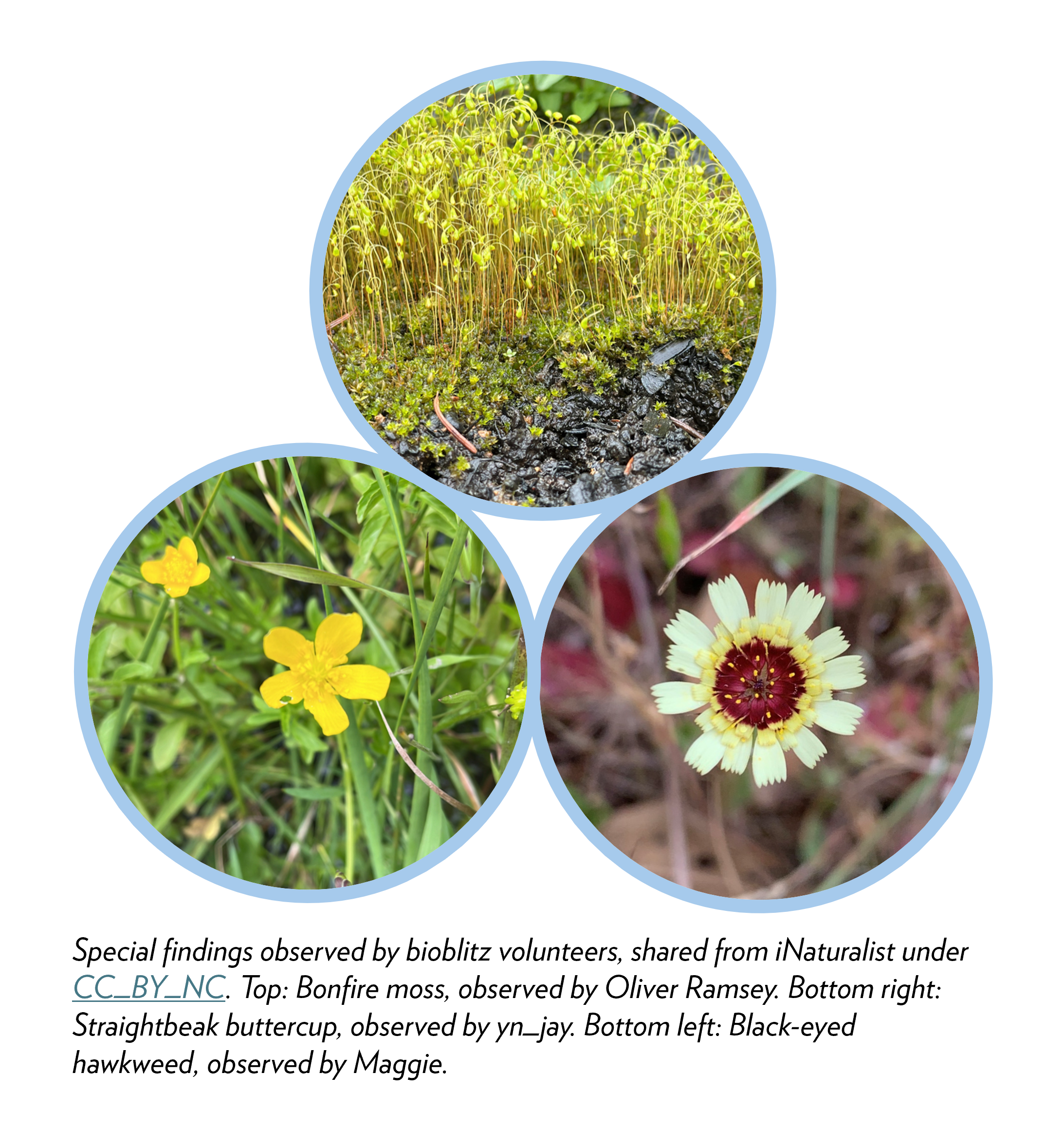
- Bonfire moss (Funaria hygrometrica), a species associated with recently burned landscapes.
- Black-eyed hawkweed (Tolpis barbata), a non-native plant never before documented on Mt. Tam, and only known from four other locations in Marin County. Early detections like this help catch invasive species before they affect ecosystems.
- Straightbeak buttercup (Ranunculus orthorhynchus var. bloomeri), a wet meadow species that hadn’t been recorded on Mt. Tam in over 80 years!
Because of their significance, staff later sent samples of the black-eyed hawkweed and straightbeak buttercup to become part of the permanent collection of Mt. Tam’s flora at the California Academy of Sciences.
Findings like these can help us better understand what helps places thrive. For example, we expect that with climate change Mt. Tam is getting drier and species that need a lot of moisture could be at risk. It’s hopeful to rediscover plants like the buttercup and know the mountain still supports them. Prescribed fire could also help some meadow species by occasionally opening areas overgrown with shrubs. Lastly, only with eyes on the land can we find introduced species that could affect the mountain.
Thank you to everyone who contributed observations, shared knowledge, and made identifications. Keep the excitement going!
- Follow the project on iNaturalist, as identification can take time.
- See all results from City Nature Challenge 2026.
- Keep noticing nature – you can add observations to iNaturalist any time.
- Join us for future programs that support Marin’s forests—see our calendar and sign up for our e-newsletter.
Want more bioblitz?
Anyone can take part in a bioblitz—no experience needed, just curiosity! You’ll join community members, scientists, and staff to connect with these lands and learn from one another. Your observations become data scientists can use. This includes tracking change over time, especially important as the impacts of climate change on habitats and species intensify. Bioblitzes are part of our community science programs, where volunteers take part in studies of species and ecosystems and build our collective knowledge about our local environment. Keep an eye on our calendar and sign up for our e-newsletter to hear about future events.