Where water finds its way: New life at Bolinas Wye
Our Work / Priority Park Enhancement Work: Bolinas Wye
On the north end of Bolinas Lagoon, something remarkable is taking root.
After years of planning, construction, and collaboration, the Bolinas Wye Wetland Resiliency Project reached a major milestone in December 2025 with the completion of its first year of native planting. What was once a constricted roadside landscape is now beginning its next chapter as a living, resilient wetland shaped by natural processes.
The project sits where Highway 1 meets Olema‑Bolinas Road, a location long known for flooding, traffic challenges, and disrupted waterways. Working with the communities of Bolinas and Stinson Beach, Marin County Parks, and the One Tam partnership, this effort brings together climate resilience, habitat restoration, and public safety in one place.
At the heart of the project is Lewis Gulch Creek. Previously confined to a roadside ditch, the creek has been re‑graded and reconnected to its historic floodplain, allowing it to flow naturally into Bolinas Lagoon. Roadways were reconfigured, including construction of a new bridge and removal of a section of Fairfax-Bolinas Road known as the Crossover, to give water more room to move while improving safety for people traveling through the area.
Once the first phase of the project wrapped up in fall 2025, the landscape was ready for its next transformation. Guided by a vegetation management plan developed by the Parks Conservancy, the site was planted with more than 10,000 native plants representing nine distinct habitat types. From willow thickets and oak woodland to salt marsh and bulrush flats, each planting community was chosen to match local conditions and support a wide range of wildlife.
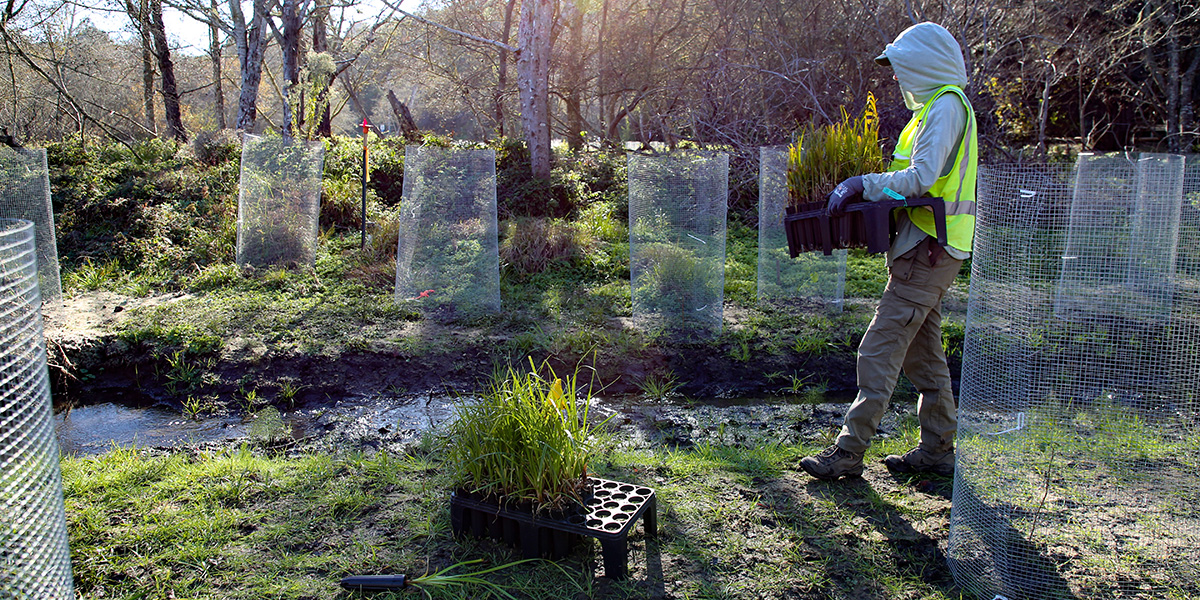
Planting began in early December, with trucks of young plants arriving from The Watershed Nursery and a staging area set up nearby at Wilkin’s Ranch. Crews carefully organized plants by habitat, using color‑coded flags to ensure each species landed in the right place. At the same time, willow stakes were harvested directly from the site and prepared for installation, helping anchor the restored creek corridor.
Over eight brisk winter workdays, teams from Conservation Corps North Bay, Great Tree Tenders, Hanford ARC, agency partners, and Conservancy staff worked in a steady rhythm. Trees were planted and protected with browse cages, followed by grasses and flowering plants tucked in between. By the end of the effort, the once‑bare ground was dotted with thousands of young plants ready to grow, timed perfectly with seasonal rains to help them settle in.
This work is part of a much larger vision for Bolinas Lagoon, an internationally recognized tidal marsh and wildlife hotspot facing the pressures of climate change and sea level rise. By restoring connections between uplands, wetlands, and waterways, projects like Bolinas Wye help the landscape adapt over time while supporting the communities that depend on it.
The Bolinas Wye project reflects what One Tam does best: Agencies, nonprofits, contractors, and neighbors coming together to give nature the space it needs to thrive. The plants may be small now, but they represent something lasting: healthier wetlands, safer roads, and a lagoon better prepared for the future.
As the site grows and changes in the years ahead, it will stand as a reminder that resilience is built step-by-step, rooted in partnership, patience, and care for this extraordinary place.